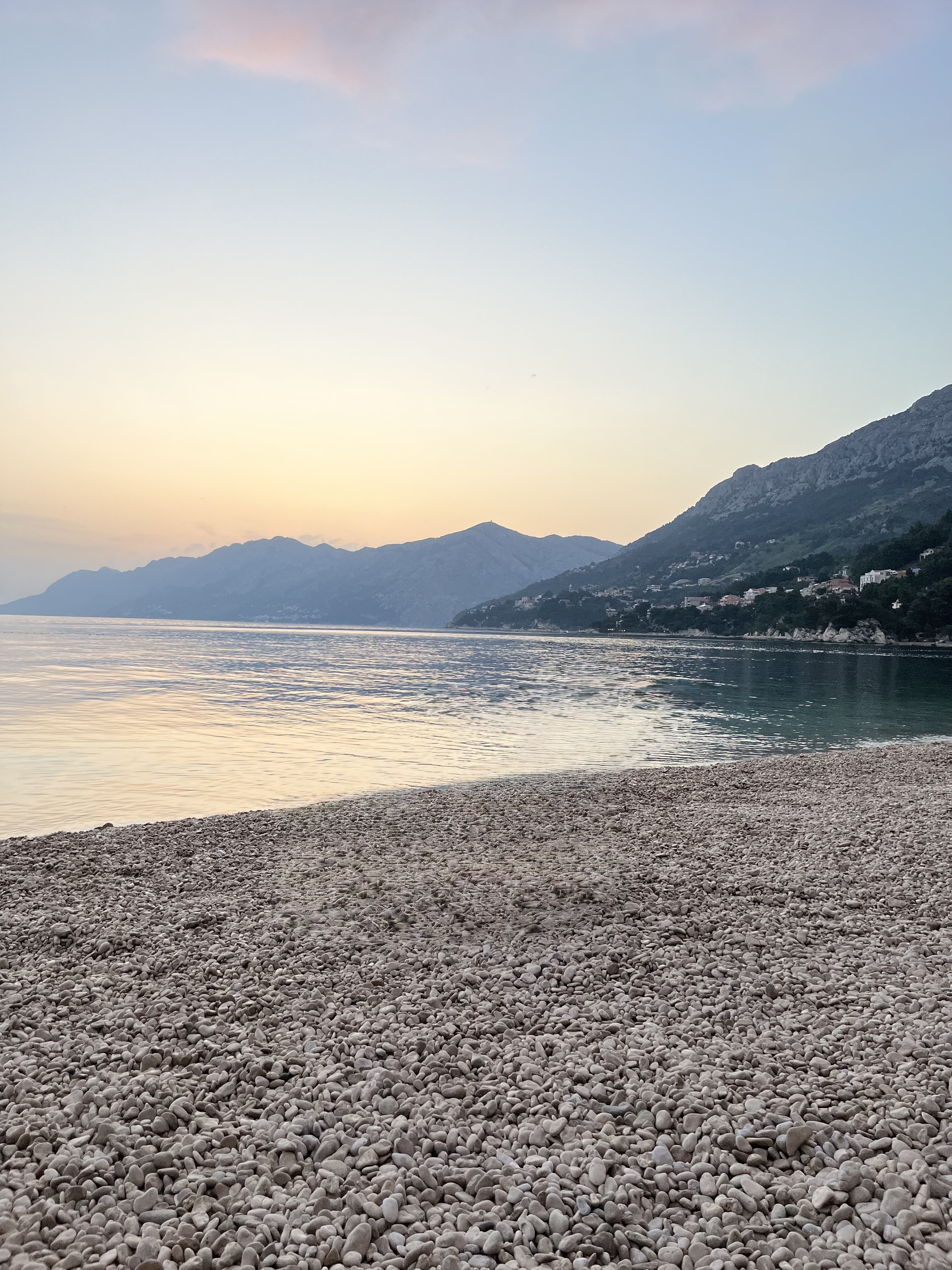
Punta Rata, named one of the world's ten most beautiful beaches by Forbes, is a 250-metre white pebble beach in Brela offering exceptional water clarity, natural pine shade, and gentle seabed slopes ideal for families.
- Water
- Clear in the bay, especially before noon
- Surface
- Fine pebble and sand patches
- Facilities
- Showers, cafes just back from the beach
- Crowds
- High in July–August — arrive early
- Best for
- First-time visitors and families
Location
Punta Rata: Croatia's Most Awarded Beach
Forbes named Punta Rata one of the world's ten most beautiful beaches in 2004. Twenty years later, this 250-metre strip of white pebble in Brela still sets the standard for the Dalmatian coast. The white stone comes from surrounding limestone cliffs, ground smooth over thousands of years by Adriatic waves.
Why It Works
The beach sits in a protected cove with Aleppo pine forest running nearly to the water's edge. This means shade all day—essential in July and August when temperatures push past 30°C. Water clarity is exceptional: 5-10 metres visibility on calm days, which is as good as the Adriatic gets.
The seabed slopes gently. You walk 15-20 metres before water reaches chest height. The bottom is smooth pebbles throughout—no rocks, no sea urchins. Families with young children take over the beach from 09:00 onwards for exactly this reason.
The Parking Trap
The main car park holds 200 cars and costs €4 per hour from June through September. It fills by 09:00 every day from mid-July through August. Overflow parking sits 400 metres uphill and requires a steep walk down through pines.
Your options: arrive before 08:30, or come after 16:00 when the afternoon crowd leaves. The sun moves behind the western headland around 17:00, but the water stays warm until sunset.
What Things Cost
Sunbeds and umbrellas rent for €15-20 per day from three concessions along the beach. Front-row spots cost more. Two beach bars serve grilled squid, čevapi, and commercial ice cream at prices 20-30% above town rates. The northern bar makes better coffee.
A small shop near the entrance sells sunscreen, beach toys, and inflatables at predictable resort markup. Buy what you need in Brela town before walking down.
Snorkelling
The rocky points at both ends hold small populations of damselfish, wrasse, and occasional octopus in the crevices. This isn't the Red Sea, but it's decent for the Adriatic. The southern point has better underwater terrain—larger boulders, more habitat complexity.
Visibility depends on wind. After bura (northeast wind), you get 10+ metres. After jugo (southeast), expect 3-4 metres and suspended sediment. Check the forecast before you bother bringing a mask.
Crowd Management
Peak density runs 10:00-15:00. In August, every metre of beach is occupied during this window. German and Austrian tour groups arrive around 10:30. Italian coaches follow at 11:00.
The far southern end sees 40% less crowding than the centre. You walk farther from facilities but gain space and easier water access.
Early morning—07:00 to 09:00—belongs to local swimmers. The water is glassy, the light is sharp, and you have room to move. Evening sessions from 18:00-20:00 offer similar space with warmer water but flatter light.
Getting There
From the coastal road (Magistrala), follow brown signs marked "Punta Rata." The approach descends through residential streets to the parking zones. Walking time from P1 to beach: 5 minutes. From P2: 10-12 minutes.
Public bus line 60 (Split-Makarska) stops at the Punta Rata junction. Add 10 minutes' walk to the beach. Buses run hourly in summer.
Wheelchair-accessible wooden walkways reach the waterline. The pebble surface itself remains difficult for people with mobility issues.
What's There
Four toilet/shower blocks, cleaned twice daily in high season. Three changing cabins. Cold freshwater showers. Two beach bars. First aid station staffed 09:00-19:00 in July and August. Kayak and paddleboard rental at €10-15 per hour.
The showers run on unheated groundwater. It's shockingly cold—refreshing after an hour on pebbles, less so if you're unprepared.
When to Skip It
The first two weeks of August combine peak European holidays with Punta Rata's reputation. The result is density that destroys the experience.
Windy days with onshore chop muddy the water and stir up pebbles into suspension. Check forecasts: sustained winds above 15 knots from the south or southwest mean poor conditions.
Final Assessment
Punta Rata delivers what it promises: clear water, natural shade, safe swimming, genuine beauty. You pay for that with crowds and parking stress during peak weeks. Come early or come late, and you'll see why Forbes noticed this beach in the first place.
Photos
Ratings and reviews
Ratings as of 28 Apr 2026